Product guide
Jojoba Oil Explained: A Carrier Oil Buying Guide
Understand jojoba as a liquid wax or carrier oil, assess cosmetic claims, and compare product labels.
As an Amazon Associate I earn from qualifying purchases. Shopping links may earn us a commission at no extra cost to you. How affiliate links work.
On this page
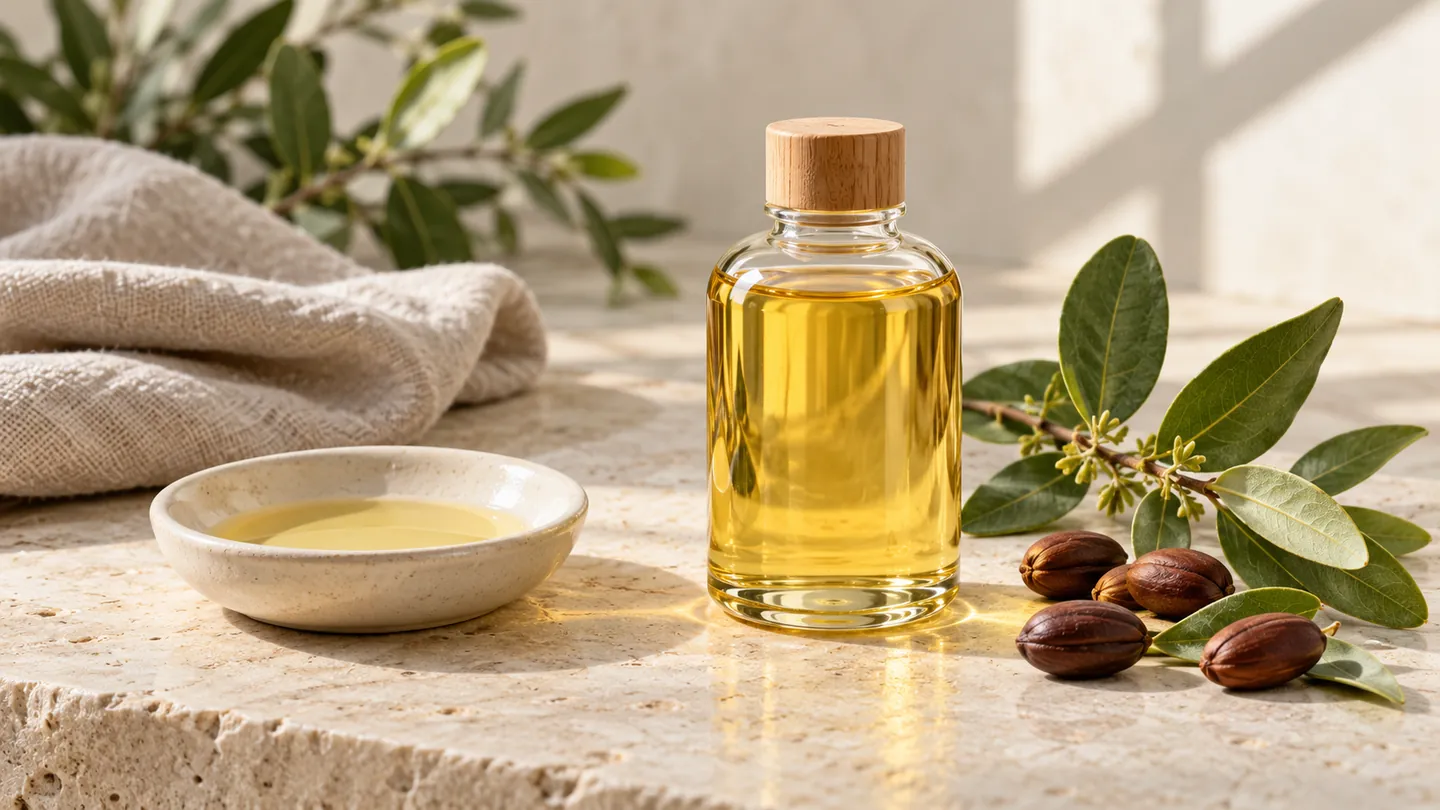
Jojoba is usually grouped with carrier oils, not essential oils. Its composition is rich in wax esters, which is one reason it belongs in a different conversation from highly aromatic concentrates such as tea tree or peppermint oil.
For a buyer, the useful question is whether a jojoba product fits a cosmetic purpose and preference—not whether it is a cure for a long list of skin conditions.
What kind of product is it?
A bottle may contain jojoba alone or include it in a blend or finished cosmetic. Read the ingredient panel rather than assuming the product name gives the whole formula. Added fragrance, other oils, and intended-use directions can change the buying decision.
Our essential oils vs carrier oils guide explains why you should not substitute jojoba for an aromatic oil in a diffuser.
What can the evidence tell us?
A published review describes jojoba's composition and potential dermatological applications. A review of possible applications is not proof that any bottle treats acne, scars, or another condition. The formulation, study design, and measured outcome still matter. Read the jojoba review.
It is more useful to evaluate a cosmetic for the purpose on its label than to turn an ingredient's research story into a guaranteed personal result.
Compare the product details
Look for the full ingredients, intended use, quantity, supplier information, and storage directions. Check whether terms such as refined or unrefined are explained. Do not assume a particular processing claim establishes clinical effectiveness or that the most expensive bottle will suit every person.
If you prefer a fragrance-free product, inspect the ingredient list for added fragrance rather than relying on the front label. If the seller provides batch information, check that it relates to the product being supplied.
Think about your routine
Decide what you want from the product and whether another item already serves that purpose. Adding a carrier oil is not mandatory for a complete skincare routine. A finished moisturiser may be a more straightforward choice if that is what you need.
Follow the product's directions. A person with a skin condition or a history of reactions should ask for tailored advice rather than treating “natural” as a safety guarantee.
Shopping without exaggerated claims
Search Amazon for jojoba oil. Compare the actual formulation, seller, and size. We have not ranked current retail batches or performed a controlled comparison of how they feel on skin.
For persistent symptoms, use qualified healthcare advice instead of an ingredient-shopping checklist. For general buying questions, start with how to buy oils.
Sources and approach
Sources: Jojoba in dermatology: a succinct review and FDA fragrances in cosmetics. This is a product-literacy guide, not a treatment recommendation.