Oil bottles
Why Some Essential Oil Bottles Drip Slowly
See how the insert in the bottle neck, the dispensing angle and the oil itself can change the way drops flow.
On this page
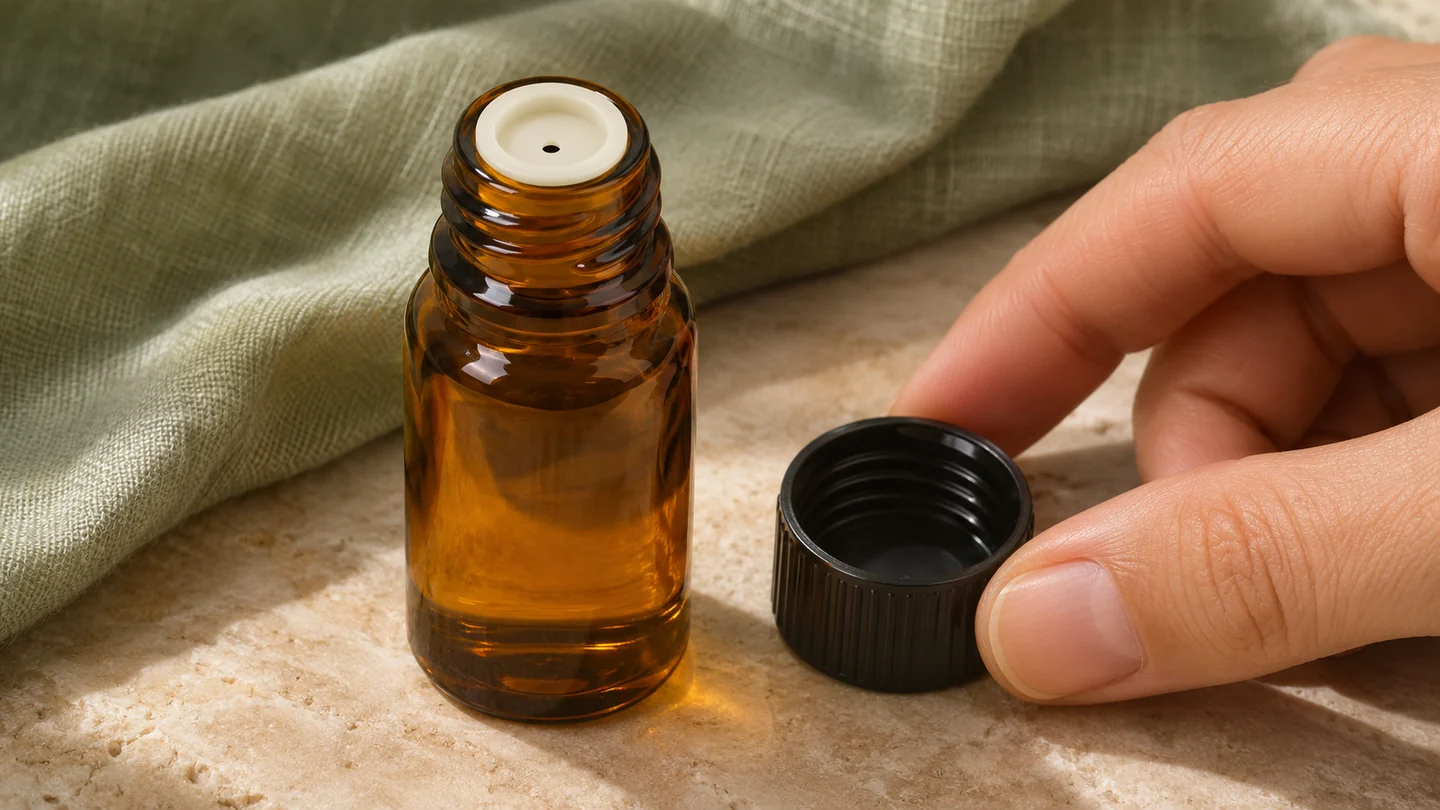
If an essential oil bottle is slow to release its first drop, check the maker’s dispensing directions before shaking it. The small insert fitted into the neck can be designed for a particular bottle angle. With one design the bottle points straight down. With another it tilts like a bottle you’re pouring from. Carow Packaging’s dropper flow guide
What the insert does
On bottles fitted with a dropper insert, the screw cap comes away and the insert stays in the neck. Carow describes a system with two openings. Oil leaves through one and air enters through the other. Both openings can affect the flow. A bottle of the same size can therefore dispense differently if the insert or the oil changes. Carow Packaging’s dropper flow guide
This closure works differently from a squeeze-bulb pipette, which lifts out with the cap. If you’re comparing the two, look for a picture or description of the open bottle. The word “dropper” on its own leaves the closure unclear. Our carrier oil packaging guide shows how one brand changes the closure as bottle size increases.
Why one bottle drips sooner than another
Packaging supplier Plasdene distinguishes vertical inserts, which are meant to dispense with the bottle inverted, from horizontal inserts, which work with the bottle tilted. Plasdene notes that the liquid and the angle can affect drop size and frequency for horizontal designs. It also calls for testing vertical inserts with the intended liquid. The name of the insert tells you how it’s designed to be held. It gives you little basis for predicting how long an unfamiliar bottle will take to drip. Plasdene’s horizontal and vertical dropper guide
Thickness matters too. Carow describes matching a wider or narrower liquid opening to the oil and testing the flow with the actual product. If you switch oils and the new bottle drips more slowly, the difference alone tells you little about the oil’s identity. Check the label for that information. Our guide to buying essential oils covers the label details worth comparing. Carow Packaging’s dropper flow guide
What to check before replacing an insert
Start with the directions on the bottle or the maker’s product page. Use the stated angle if one is given, and give the first drop time to form. If the bottle still won’t dispense or the insert is loose, ask the maker whether it offers a replacement matched to that bottle and oil. That keeps the dispensing setup tied to the package it was designed for. Carow Packaging’s dropper flow guide
Treat a drop count as specific to the bottle and liquid being used. The packaging guides describe why drop size varies, even among bottles with similar-looking inserts. If a task calls for a volume in millilitres, use a tool marked for that volume. Plasdene’s horizontal and vertical dropper guide