Label and storage guide
Hydrosol vs Essential Oil: What Is in the Bottle?
Identify botanical waters, essential oils and spray formulations, then check storage directions and packaging before choosing a bottle.
On this page
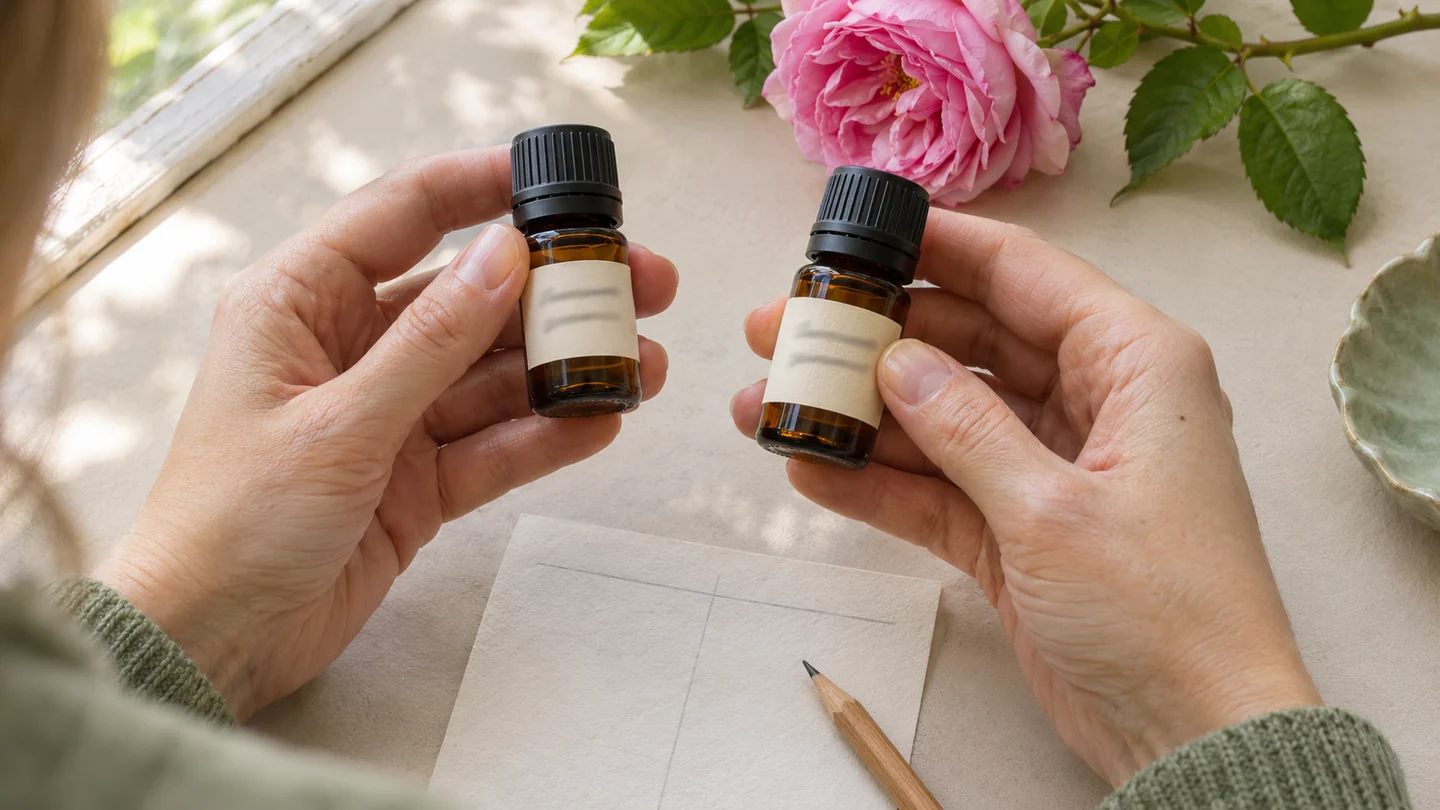
A hydrosol is an aromatic, water-based distillate. It is a different product from the essential oil associated with the same plant. Before choosing a bottle, check whether the supplier describes a distilled botanical water, an essential oil or a formulated spray. A shared flower name does not make the contents interchangeable. Mountain Rose Herbs’ interview with its hydrosol distillers
Check what was distilled and collected
Hydrosols can be collected during essential-oil production, but some producers distill specifically for the aromatic water. In the Mountain Rose Herbs interview, the growers describe their operation as a dedicated hydrosol distillery using fresh plant material. That distinction is worth asking about if a seller’s description leaves the production method unclear. Grower interview
A current product example makes the process more concrete: Mountain Rose Herbs describes its rose hydrosol as water-steam distilled from Rosa damascena petals. That tells you more about the contents than the spray nozzle or the flower pictured on a label. Rose hydrosol product details
Look for “water” and “oil” in the ingredient details
Eden Botanicals lists its rose hydrosol’s ingredient name as Rosa Damascena (Rose) Flower Water. Its Bulgarian rose otto essential oil instead lists Rosa Damascena (Rose) Flower Oil, with hydrodistillation as the extraction method. Both identify the rose flower, but they describe different materials. Hydrosol details, rose otto details
Use those examples as a cross-check, then read the complete ingredient list for the bottle you are considering. If it lists added ingredients, ask the supplier how the finished product is made rather than assuming that every aromatic spray is a single botanical distillate. If only a marketing description is visible, request the ingredients before ordering.
For another rose-extract distinction, see our rose otto versus rose absolute guide. Our essential oils and carrier oils guide explains a separate difference you may encounter when comparing bottles.
Read the storage directions before choosing a size
Storage can change the practical buying decision. Eden Botanicals asks customers to refrigerate its rose hydrosol to prolong freshness. Its rose otto instructions instead specify a cool, dark place away from heat and light. Follow the directions for the exact product; do not copy the routine from the adjacent bottle on your shelf. Hydrosol storage instructions, rose otto storage instructions
Before buying a larger hydrosol bottle, check where you will keep it, the supplier’s date guidance and how you will dispense it. Keep the original label and purchase information accessible. Our guide to organising oils without losing label information offers a useful way to preserve those details.
Compare the product you actually need
A practical comparison starts with four questions:
- Is the product a hydrosol, essential oil or a spray formulation?
- Which plant and plant part does the supplier identify?
- What are the complete ingredients and intended use?
- Can you follow its storage and dispensing directions?
Compare size and packaging after those answers are clear. For example, Mountain Rose Herbs specifies a mister for its 3.5-ounce rose hydrosol, while its larger sizes come without one. Check the selected size’s packaging rather than relying on the main photograph. Packaging details
These supplier examples explain identification and care, not which product performs best. We have not tested their contents, preservation or scent. The guide does not establish suitability for a particular application or device; use the relevant product and equipment instructions before making a substitution.