Practical organisation guide
Organise Oil Bottles Without Hiding Their Labels
Compare shelf, drawer and divided-box layouts, using cap stickers and a location map while keeping original product information accessible.
On this page
A useful oil organiser lets you find a bottle and still read its original information. Start with the bottles you own, choose a layout that leaves them accessible, and use cap stickers or a location map as finding aids. Keep the manufacturer's label and any accompanying directions available.
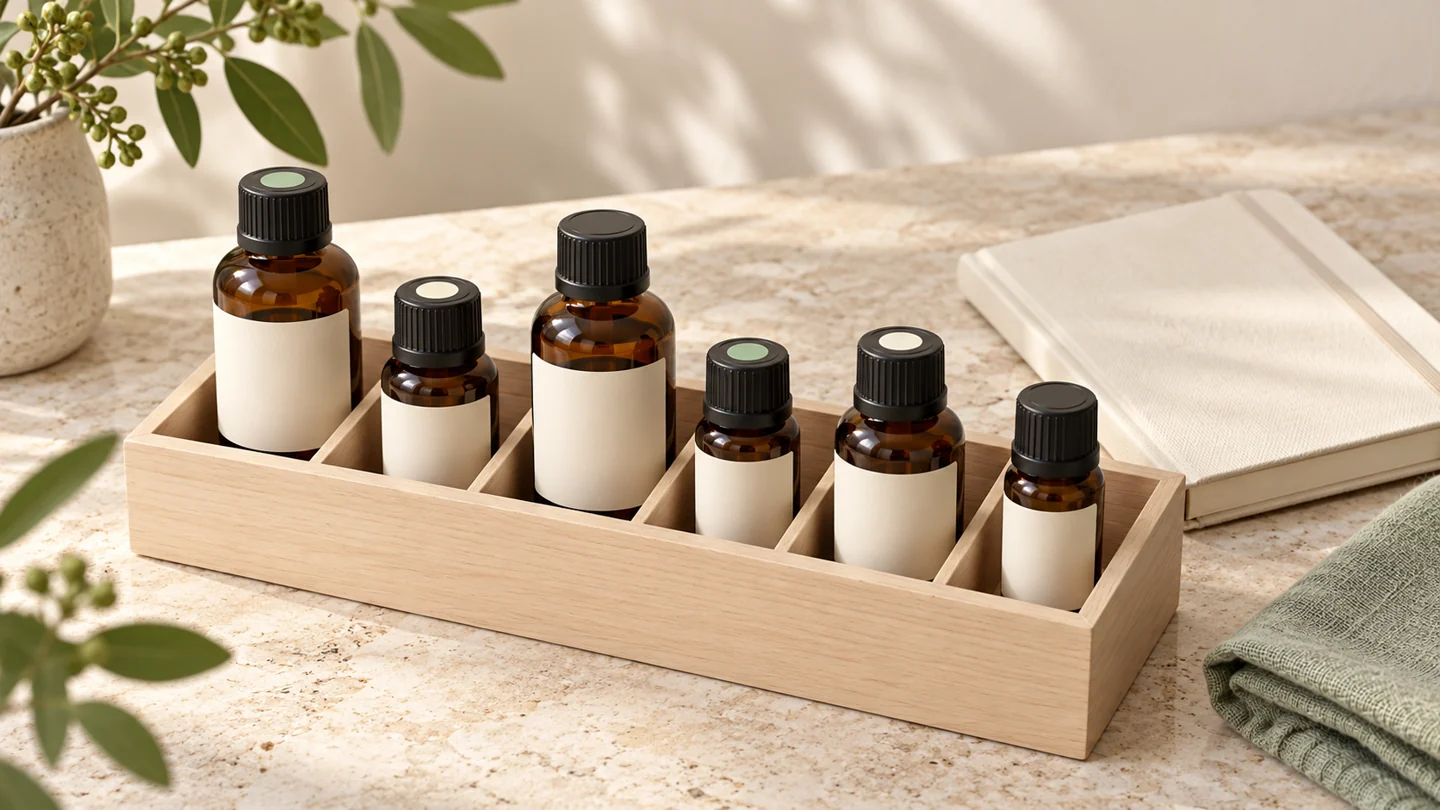
This is an organisation guide, not a tested storage-case review. We have not measured a case's protection or a bottle's remaining shelf life. The cover is a generic illustration; its blank label panels do not represent real product labels.
Decide how you will read the collection
Plant Therapy's organisation guide describes drawer inserts, divided boxes and storage bins. It also suggests an inventory and coloured stickers for finding bottles in a box. Those are useful organising ideas, but a short sticker cannot carry everything supplied with a product. Plant Therapy: organising and storing essential oils.
Choose a layout according to the view you will actually have:
| Layout | Finding aid | Detail to check before filling it |
|---|---|---|
| Shallow shelf or tray | Front labels facing the access side | You can lift and turn each bottle to read the remaining panels |
| Drawer with dividers | Cap names or a simple row map | The drawer closes with the tallest bottle upright and leaves room to grasp it |
| Deep divided box | A map inside the lid | Slots suit the actual bottle widths, including wider carrier-oil bottles |
| Several small bins | A clear category on each bin | Similar-looking bottles retain their individual identities within the group |
Measure the available height and openings against your own containers before choosing an insert. A stated number of bottle spaces does not answer whether your particular assortment fits.
Use cap labels as an index
A cap sticker can help you locate a candidate bottle from above. Once you pick it up, check the full product label. FDA's consumer guidance for cosmetics asks readers to read the whole label, including ingredients, warnings and directions. This is a reason to preserve access to that information when organising cosmetic oils and finished products. FDA: understanding cosmetic labels.
For example, two hypothetical bottles might both have “lavender” on a cap sticker, while their full names and ingredient panels describe different products. A shared cap colour or shortened name does not settle which bottle you have selected.
Place any added finding aid where it leaves printed information visible. If a cap already carries useful wording, use a divider card or location map instead. Keep caps with their own bottles as you rearrange the collection.
Give each location a clear meaning
Use categories you can recognise from the supplied product information, such as essential-oil singles, blends, carrier oils and finished products. Our oil-type guide explains those distinctions.
A simple drawer map can identify rows or slots without adding anything to the bottle. As an illustrative entry, “B2 — brand, full product name, size” is more useful than “B2 — purple bottle.” Update the map when you move a bottle. The slot describes its location, so it must not become a substitute for checking the label.
Keep the original carton or leaflet with the collection when it carries directions or other information you need. A nearby file or labelled envelope can work when the carton will not fit the organiser.
Choose the storage place before the insert
A tidy arrangement still needs to follow the actual product's storage directions. FDA notes that storage conditions affect cosmetic shelf life and that sunlight, air and temperature changes can alter a cosmetic's characteristics. That is context for cosmetics, not a universal lifespan for every oil. FDA: shelf life and storage.
Choose a suitable location first, then an organiser that fits it. An attractive display does not establish that the location meets the directions. This guide does not prescribe refrigeration or promise that a box extends shelf life.
Keep the system easy to maintain
After using a bottle, return it to its recorded place. When a purchase arrives, check its fit and add its full identity before putting it among similar bottles. Remove empty spaces from the map or mark them vacant.
Keep dates and batch details in their own record; our batch and expiry label guide covers that task. For differences between container sizes and closures, see the carrier-oil packaging guide. The organiser's job is to make the right bottle and its information easier to retrieve.