Oil labels
Peppermint and Cornmint Oil Labels
Check the botanical name when a listing says peppermint, and compare the plant part, processing and batch before replacing an oil.
On this page
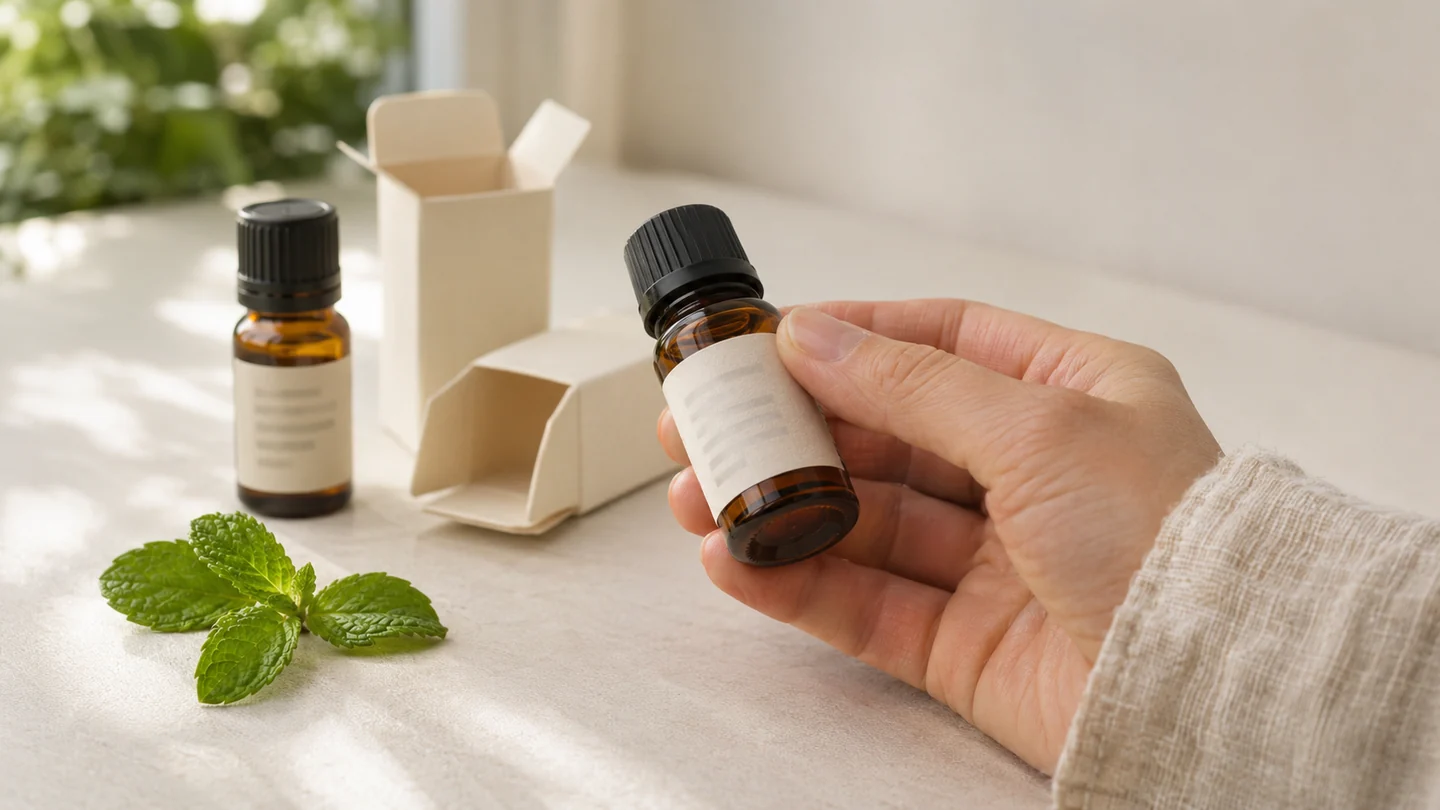
When two oils both use the word “peppermint,” check the botanical name in the ingredient list or supplier specification. Mentha × piperita is the name you’ll see on peppermint oil such as Eden Botanicals’ U.S. example. A product sold as cornmint may instead say Mentha arvensis. Bomar’s cornmint listing even puts both “peppermint” and “cornmint” in the product title. Eden Botanicals’ peppermint specification · Bomar’s cornmint listing
Read the botanical name alongside the ingredient name
The same listing can give you two ways to recognise peppermint. Eden Botanicals uses Mentha x piperita L. for the botanical name and Mentha Piperita (Peppermint) Oil for the cosmetic ingredient name. Look for the word piperita in either field when that is the oil you want. The supplier also lists the leaf as the plant part and steam distillation as the extraction method. Those details help when you are matching a bottle you bought before. Eden Botanicals’ peppermint specification
On Bomar’s listing, arvensis identifies its cornmint example despite the “peppermint” wording in the title. The listing also links to a specification and several batch documents. If the front label and a shop’s title leave you unsure, ask for the specification for the exact oil and compare it with the package. See our guide to essential oil labels for the other fields worth checking. Bomar’s cornmint listing
Compare scent and processing separately
A minty smell can make these oils seem interchangeable when you smell them. Sensient describes its de-mentholized cornmint as having a peppermint-like scent while identifying the botanical source as Mentha arvensis. Treat that description as a scent note for that particular oil. If you’re trying to replace a bottle, check for a processing description such as de-mentholized as well as the botanical name. Sensient’s cornmint specification
If a supplier provides a batch report, match the lot on the report to the one on the bottle before using it to compare composition. A supplier’s general scent description applies to its listing. A batch report describes the sample identified in the report. Our guide to reading GC/MS reports explains what to check before relying on the numbers.
Before ordering a replacement
- Write down the botanical or ingredient name from your old bottle.
- Match that name on the new bottle or the supplier’s specification. If the listing only says “mint” or “peppermint,” ask which botanical name is on the package.
- If you want a close match, also compare the plant part, extraction or further processing, and batch details where available.
When you’re choosing a scent, an aroma description can help you narrow the options. When you need to match an oil’s identity, use the botanical name and check that the documentation belongs to the product you’re ordering.