Oil labels
Rosehip Seed Oil vs. Fruit Oil: How to Read the Label
Learn what rosehip seed and fruit ingredient names tell you, when to ask about the plant part, and how to spot a blend.
On this page
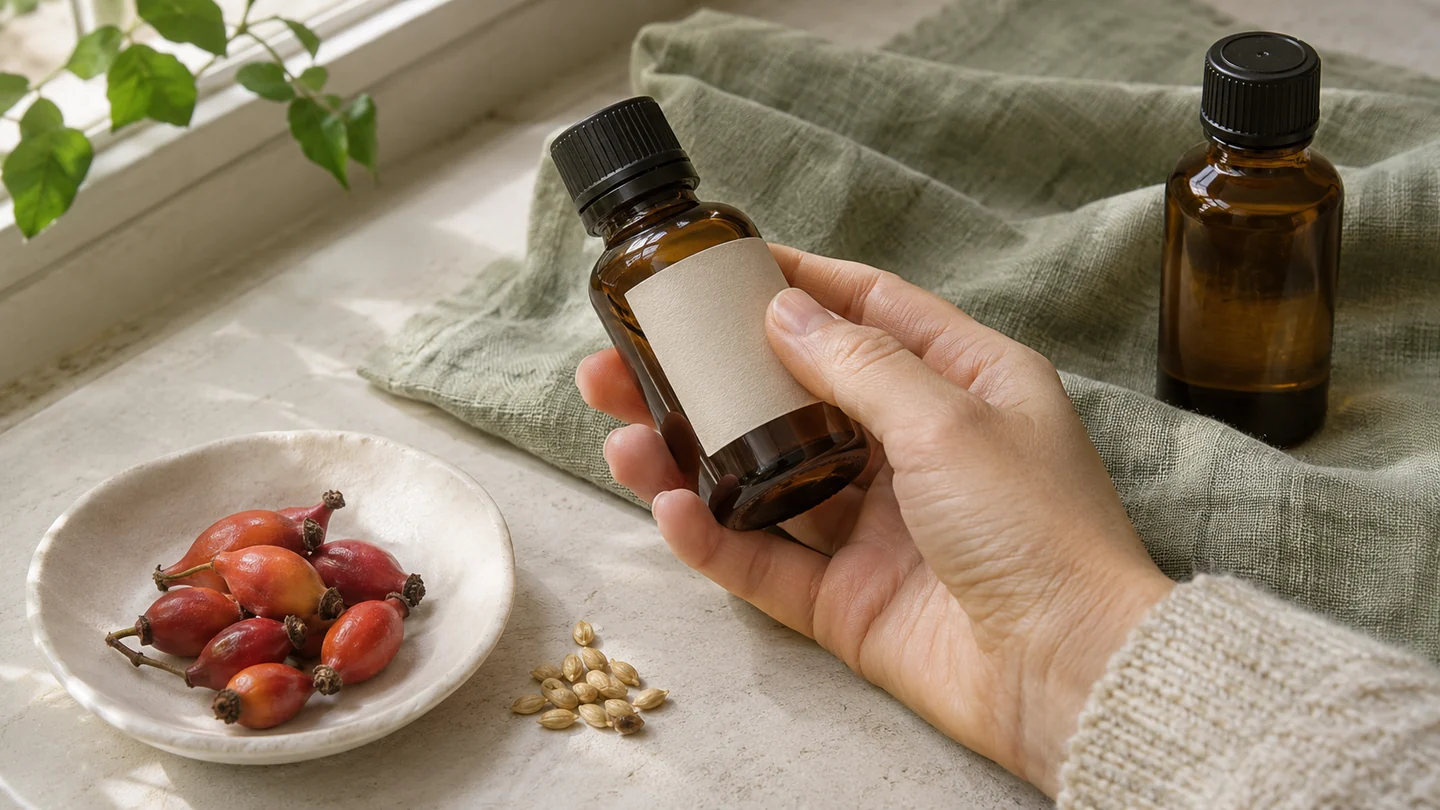
Two bottles can both say “rosehip oil” and contain different ingredients. The useful question is which part of the rosehip the supplier used. The ingredient panel is the place to start, especially if you want an oil made from the seeds alone.
Start with the plant part
Rosa Canina Seed Oil identifies oil from the seed of Rosa canina. One clear example is the U.S. ingredient list for The Ordinary’s cold-pressed rose hip seed oil. It lists only that ingredient. The company also says its online list can differ from the box by time or region, so check the package you’re buying. The Ordinary’s ingredient list
Rosa Canina Fruit Oil takes an extra check. Afrigetics uses that name for a CO₂ extract made from rosehip pulp. The COSMOS certified raw materials directory also shows the same ingredient name on an Akoma entry called Rosehip Seed Oil. Those are two different records. If the label simply says “fruit oil,” ask the supplier whether its material comes from the pulp, the seeds, or both. Afrigetics’ technical brochure, COSMOS raw materials directory
The extraction method answers a separate question. A supplier can name the process and the plant part together, as Afrigetics does for its pulp extract. Look for both pieces of information if the distinction matters to you. The same approach helps with refined and unrefined jojoba oil, where the processing description adds information beyond the ingredient name.
Check the rest of the ingredient list
A face oil can contain extracts from more than one part of the rosehip. The U.S. ingredient panel for Pai’s Rosehip Bioregenerate lists Rosa Canina Seed Extract and Rosa Canina Fruit Extract separately and marks both as CO₂ extracted. It also lists tocopherol and other ingredients. The panel tells you both extracts are present. To compare the amounts of seed and fruit extract, you’d need proportions from the maker. Pai’s full ingredient list
That makes the rest of the list worth reading even when the front label names the part you want. If your goal is a single-ingredient seed oil, look for a panel with only the seed oil listed. If you’re comparing a finished blend, note any additional oils or extracts so you can tell what changed between bottles. Our guide to reading vitamin E oil labels shows why an ingredient such as tocopherol is worth checking alongside the other oils.
What to ask when the label is vague
- Find the full ingredient panel for the exact bottle. Use the brand page for your market and compare it with the bottle or carton when you can.
- Separate the species, part and process. Look for the botanical name, ask which part was used, and check how the material was extracted if that matters to your comparison.
- Ask for the supplier’s specification when the wording is unclear. A question such as “Does the Rosa Canina Fruit Oil in this bottle come from the seeds, the pulp, or both?” gives the supplier something specific to answer. If the part matters to you and remains unclear, choose a bottle whose documentation spells it out.
The examples here illustrate how to read the listings. They give you a way to compare ingredient declarations without trying to identify the plant part from the colour of the oil or the front of the bottle.