Label guide
Rose Otto vs Rose Absolute: Reading the Bottle
Check rose extraction methods, ingredient names and carrier-oil dilutions before comparing bottles of rose otto and rose absolute.
On this page
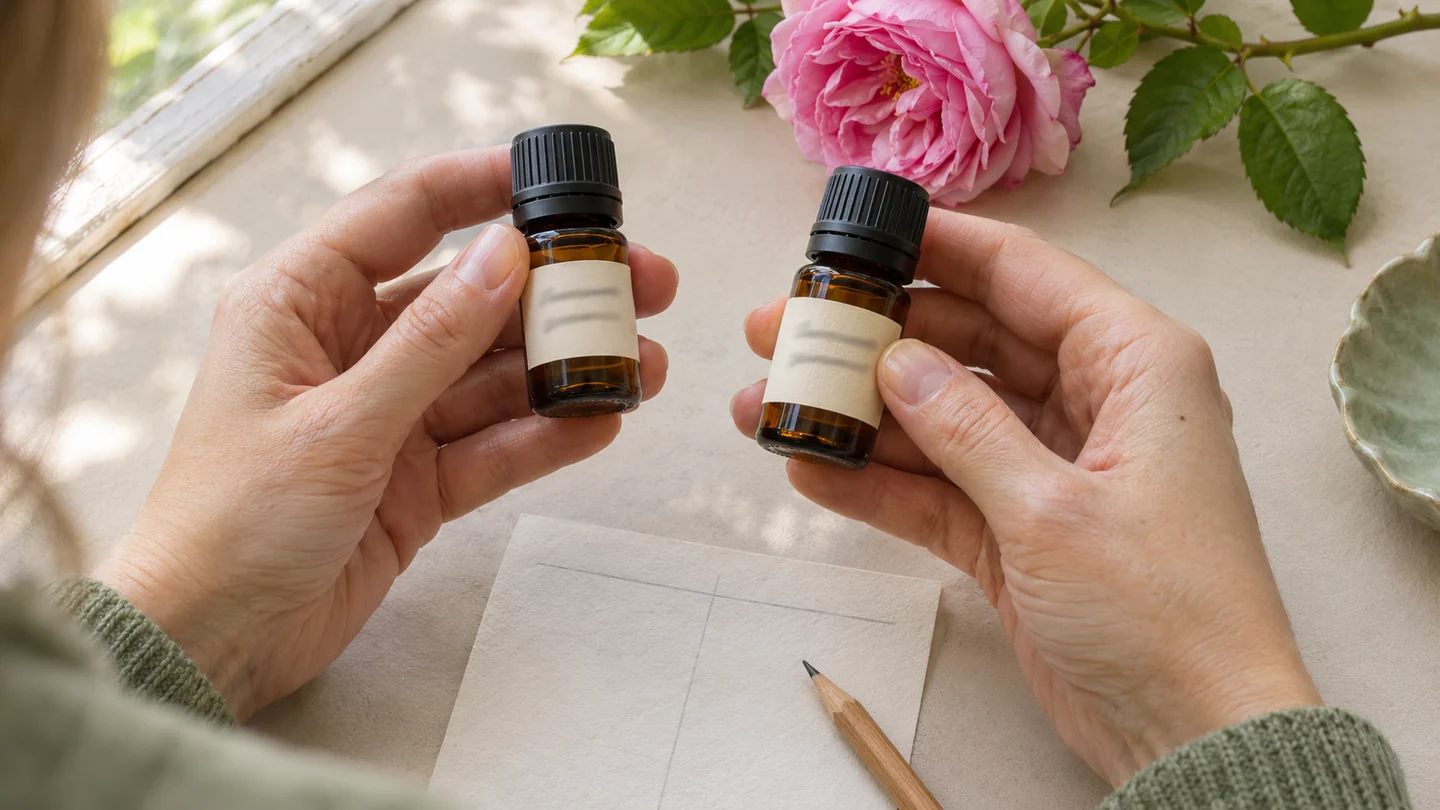
Rose otto and rose absolute describe different extraction methods. A rose-flower name alone does not tell you which extract is in the bottle, or whether it has already been diluted in a carrier oil. Check the extraction method and full ingredients before comparing two products. Eden Botanicals provides a useful example: its Bulgarian rose otto is hydrodistilled, while its Bulgarian rose absolute is solvent extracted. Both list the same botanical name, Rosa x damascena. Rose otto product information, rose absolute product information
Start with the extraction method
For the otto example, look for hydrodistilled in the supplier’s technical details. For the absolute, look for solvent extracted. Those descriptions identify a production difference even when the flower, country and bottle size match. Neither word, on its own, establishes which bottle suits your purpose.
NOW Foods explains the process for its own rose and jasmine absolutes: solvents extract aromatic material from the plant, producing a wax-containing intermediate called a concrete; a further separation removes the waxes, and the solvents are reclaimed during processing. Read that as a description of the maker’s process, rather than assuming every seller uses identical equipment or has the same residual-solvent specification. NOW Foods essential oil FAQs, absolute extraction section
If a listing only says “rose oil,” ask the supplier for the extraction method. A floral photograph and an aroma description leave that question unanswered.
Read the percentage and the carrier together
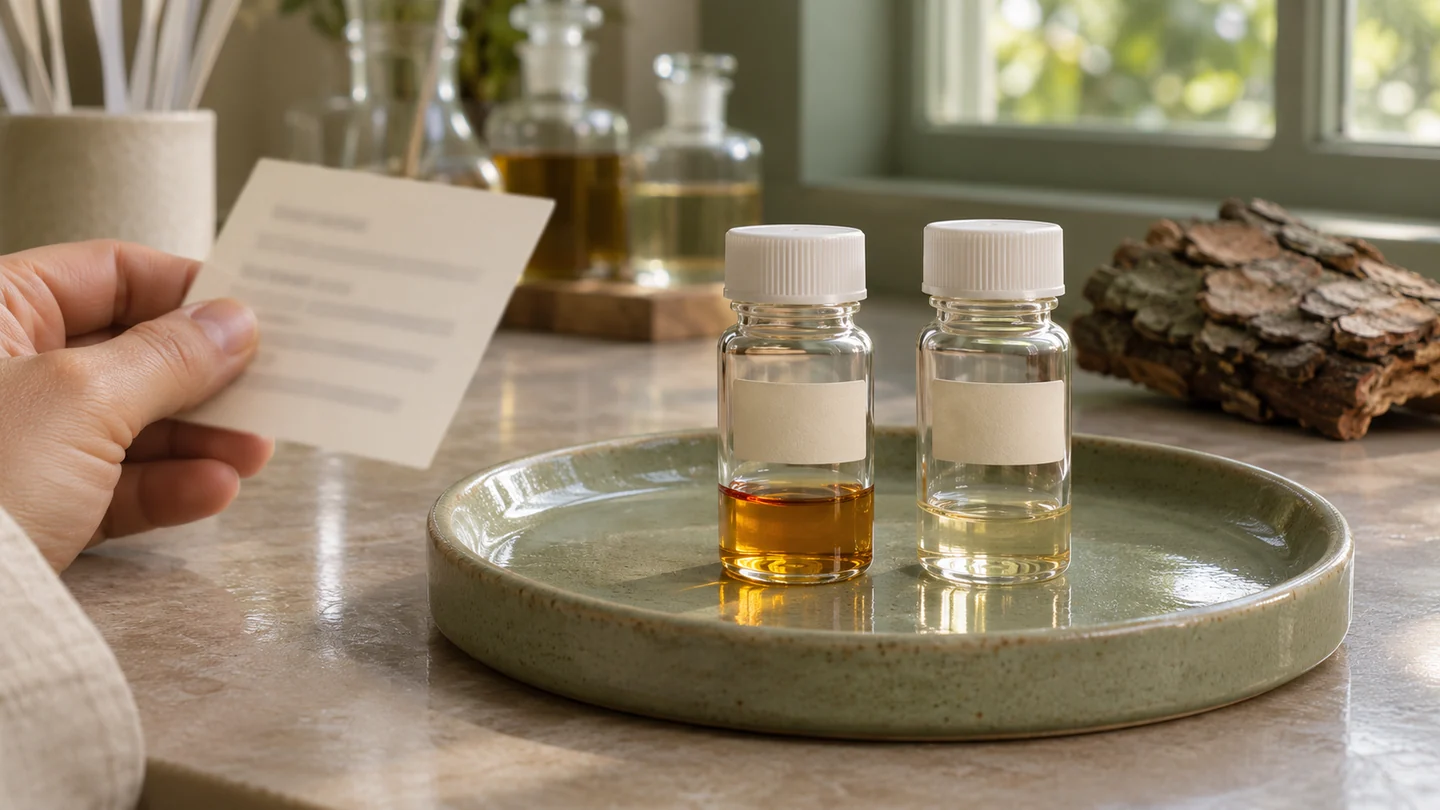
A named extract can also be sold as a premixed dilution. Eden Botanicals separately lists Rose Absolute, Bulgaria – 10%, describing it as 10% rose absolute in 90% organic fractionated coconut oil. Its ingredient field lists Rosa Damascena Flower Extract and Caprylic/Capric Triglyceride. That is a different formulation from the supplier’s rose absolute without a carrier listed. 10% rose absolute product information
The percentage tells you about the formulation in that bottle. It is not a general instruction for applying rose extract, and it is not a score for quality. When comparing quantities, keep the stated concentration beside the bottle volume in your notes. Our bottle-size and value guide explains why volume alone can make a comparison misleading.
Use ingredient names as a cross-check
These three entries from the same supplier show what to look for:
| Example | Stated extraction | Ingredient information |
|---|---|---|
| Bulgarian rose otto | Hydrodistilled | Rosa Damascena (Rose) Flower Oil |
| Bulgarian rose absolute | Solvent extracted | Rosa Damascena Flower Extract |
| Bulgarian rose absolute, 10% | Solvent extracted rose component | Flower extract plus Caprylic/Capric Triglyceride |
These are the supplier’s published descriptions, not a universal naming test for every rose product. Read the technical sheet and ingredients together; ask for clarification if they disagree. The supplier pages above are label examples, not purchase recommendations or products we have tested.
Make a useful comparison before ordering
Write down five details for each candidate: botanical name, plant part, extraction method, stated concentration and complete ingredients. Then check the product’s intended use and directions against what you actually plan to do with it. Leave an unanswered field visible instead of filling it in from a similar-looking bottle.
For example, if you wanted an undiluted aromatic ingredient but the listing supplies a carrier-oil blend, that formulation difference deserves attention before you compare bottle sizes. Our guide to essential oils and carrier oils explains their different roles.
This guide helps identify what a rose product contains. We have not compared these extracts by smell or tested their composition, performance or suitability for a particular application. For a batch-specific composition question, request the supplier’s current documentation; our guide to reading GC/MS reports explains the limits of those reports.