Oil labels
Copaiba Oleoresin and Distilled Essential Oil
Check the extraction method when a copaiba label says balsam, and see how suppliers identify oleoresin and distilled oil.
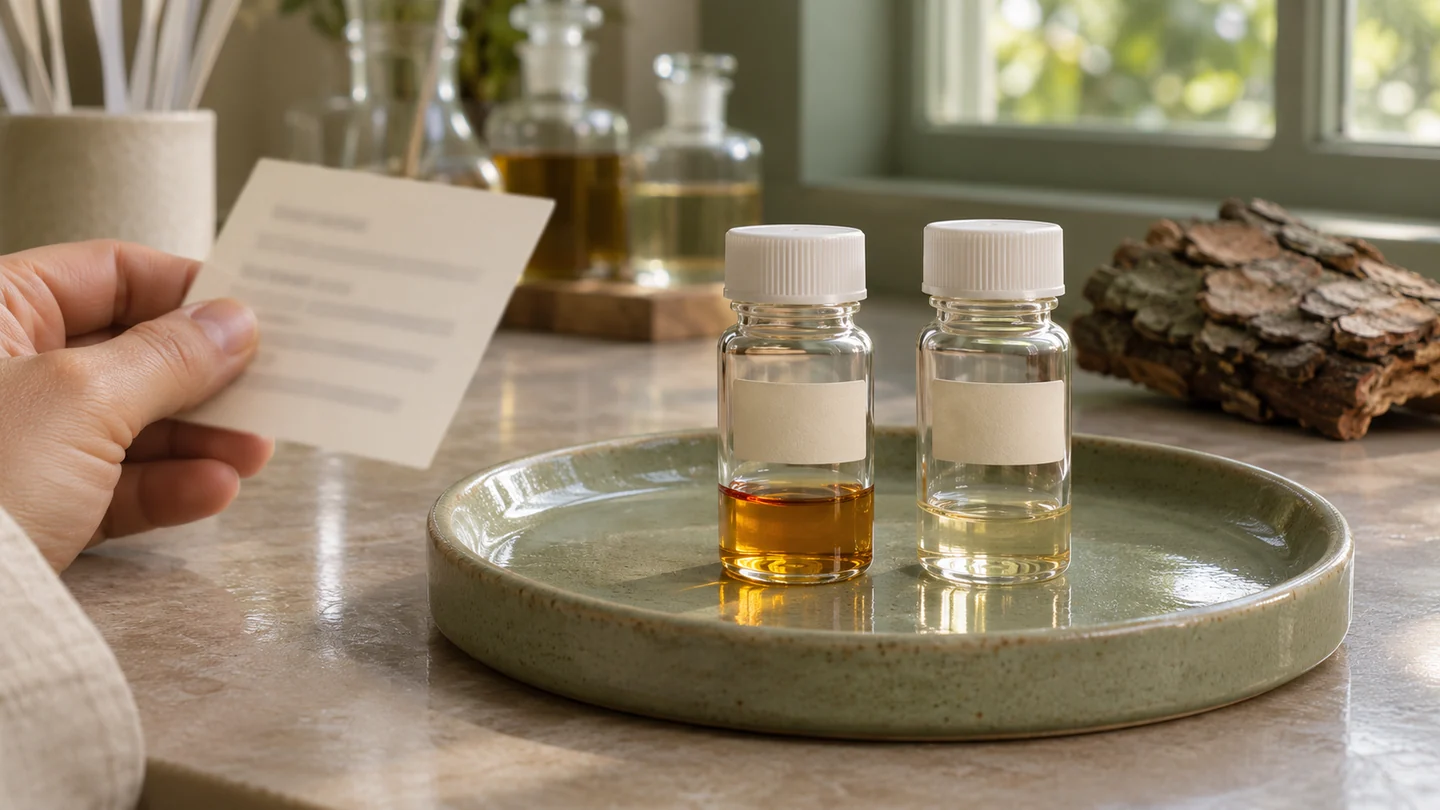
If a bottle says “copaiba balsam,” look for the extraction or processing field. It can refer to the oleoresin collected from the tree or appear as part of the ingredient name for oil distilled from that material. If you’re replacing a bottle, check both the botanical name and how the contents were prepared. Eden Botanicals’ balsam specification · Health Canada’s ingredient record for distilled copaiba resin oil
Which material is in the bottle?
Oleoresin is the material collected from the trunk. Eden Botanicals describes its Copaiba Balsam as a natural exudate, meaning material released by the tree. Its specification lists Copaifera langsdorffii and identifies the plant material as resin. In this case the word “balsam” refers to the collected material. Eden Botanicals’ balsam specification
Distilled copaiba essential oil is made from that type of starting material. Givaudan describes filtering and steam-distilling resin from Copaifera officinalis. Health Canada’s ingredient record likewise identifies trunk oleoresin as the starting material and steam distillation as the preparation for its Copaifera officinalis resin oil entry. Givaudan’s Copaiba Oil Brazil specification · Health Canada’s ingredient record
Where the names overlap
Two details can make these labels easy to misread. The distilled oil’s ingredient name can include both “balsam” and “resin oil.” The two suppliers above even list the same CAS number, 8001-61-4, while describing different preparations. When the short name or number leaves the product unclear, read the supplier’s process description. Health Canada’s ingredient record · Eden Botanicals’ balsam specification · Givaudan’s Copaiba Oil Brazil specification
A botanical name tells you which plant the supplier names. The extraction field tells you what happened to the material from that plant. The same distinction matters when reading expressed and steam-distilled lemon oil labels.
What to check before ordering
- Find the extraction field. Look for “natural exudate” or a similarly explicit description if you want the collected material. Look for “steam distilled” if you want the distilled oil.
- Check the botanical name and full ingredient list. If you’re replacing a bottle, compare those with the old label as well as checking the preparation. If the product is a blend, identify what else is listed. Our essential oil buying guide walks through the other label fields.
- Ask for the specification if the listing is ambiguous. “Is this the collected oleoresin or essential oil distilled from it?” gives the supplier a specific question to answer. If the answer matters for your purchase, use a listing that documents it.
The specifications above show how the terms are used. Bottle colour and the words “copaiba balsam” alone leave the preparation uncertain.