Extraction label guide
Cold-Pressed or Steam-Distilled Lemon Oil? Read the Extraction Label
Understand lemon-oil extraction labels, compare botanical names and peel information, and keep a useful record before replacing a bottle.
On this page
Cold-pressed and steam-distilled describe how lemon oil was extracted. Read that field alongside the botanical name and plant part; “lemon peel oil” alone does not tell you the method.
Two manufacturer pages make the distinction concrete: NOW describes its Lemon Oil as cold-pressed from fresh fruit peel, while Plant Therapy describes its Lemon Steam Distilled as distilled from lemon peel. The same plant part can appear on both descriptions. These are label examples, not purchase recommendations or a hands-on comparison.
What the extraction terms mean
Expression is a mechanical way of releasing oil from citrus peel. Steam distillation passes steam through plant material, then cools the resulting vapour and separates the oil from water. Robert Tisserand's explanation distinguishes these processes and describes expression as a cold process. Robert Tisserand: the extraction process.
Retail wording can be less precise: NOW uses the term cold-pressed for its lemon peel oil. When recording a bottle's details, keep the maker's actual wording rather than silently changing it to a different method. Neither term is a complete quality assessment.
Compare the fields, not just the front label
| Detail | NOW Lemon Oil example | Plant Therapy Lemon Steam Distilled example |
|---|---|---|
| Botanical name on the page | Citrus limon | Citrus x limon |
| Plant part described | Fresh fruit peel | Fruit peel |
| Extraction described | Cold-pressed | Steam-distilled |
NOW's product description supplies the botanical name and extraction field. Plant Therapy's ingredient information identifies the peel, botanical name and steam-distilled method. The table transcribes those identity details only; it does not establish that one product is purer, more effective or better value. NOW: Lemon Oil, Plant Therapy: Lemon Steam Distilled.
The practical lesson is that “peel” answers a different question from “extraction.” A peel ingredient does not resolve a missing method. Likewise, the word “lemon” on the front is not a substitute for the full ingredient information. Our essential oils versus carrier oils guide explains why identifying the type of oil comes before comparing bottles.
Make a record you can use again
Before comparing two offers or replacing an empty bottle:
- Copy the complete product name, including any extraction wording.
- Record the botanical name, plant part and stated method separately.
- Keep the ingredient list, bottle quantity and any product identifier with that record.
- Save the manufacturer's page address and the date you checked it.
- Mark an absent or conflicting detail as unresolved.
For example, if a replacement listing drops “steam distilled” from a familiar name, do not assume it is the same variant. Compare its manufacturer documentation with your previous record. If the method remains unclear, ask the manufacturer before treating the bottles as equivalent.
Once identity matches, quantity becomes a useful separate comparison. Our bottle-size and value guide covers that next step without relying on bottle height or drop-count guesses.
Keep the method within its limits
This guide explains extraction labels. It does not determine suitability for a particular application, rank scents or interpret a batch's laboratory results. Follow the directions and cautions for the exact product rather than transferring instructions from another lemon oil.
Keep batch and date details too: a saved product description does not identify the particular bottle you own. See our batch and expiry label guide for organising that information.
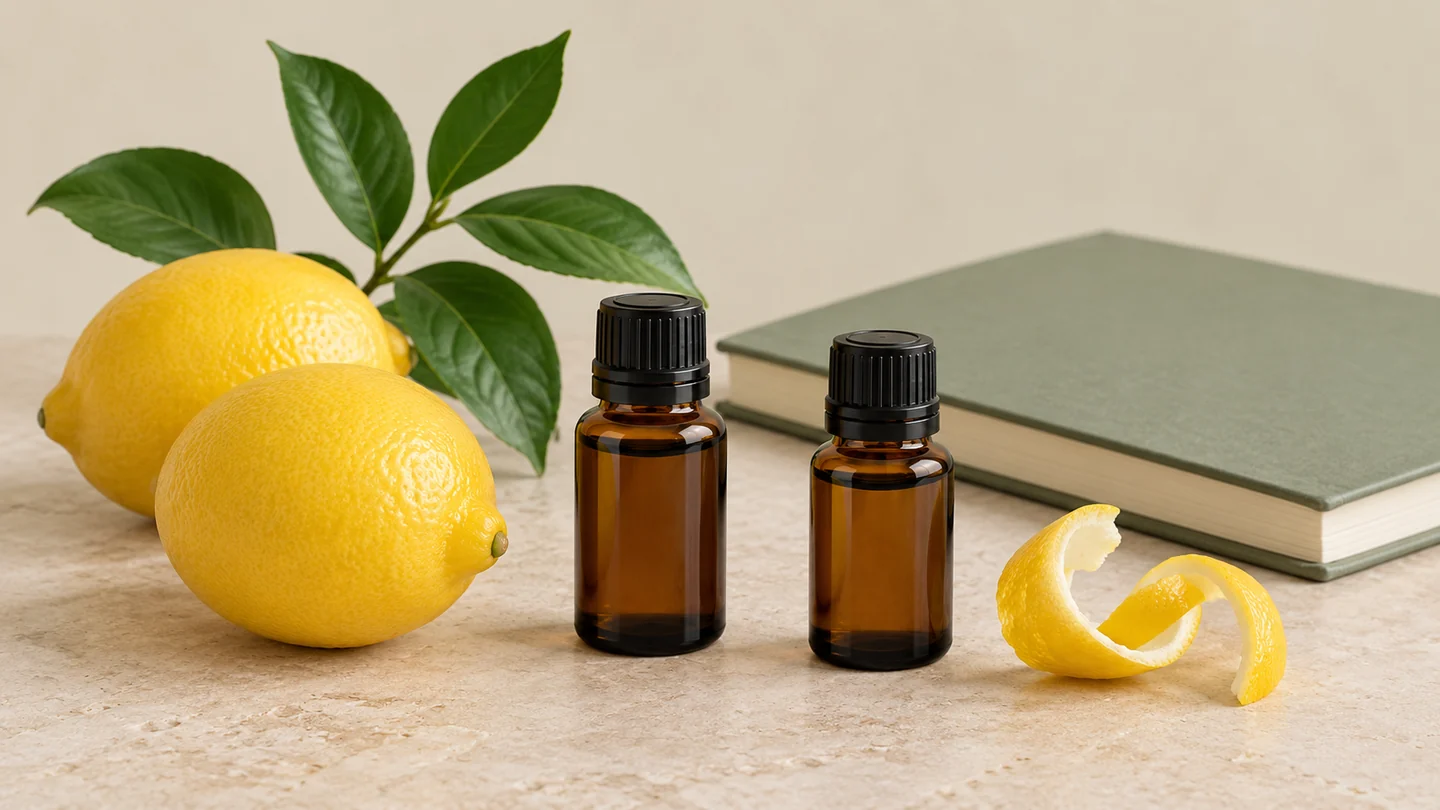
The cover is a generic botanical illustration; its unlabelled bottles do not depict either manufacturer's product.