Diffuser choices
How Passive Ceramic Aroma Stones Work
Tell a passive aroma stone from an electric ceramic diffuser and check what to expect from placement, scent and care.
On this page
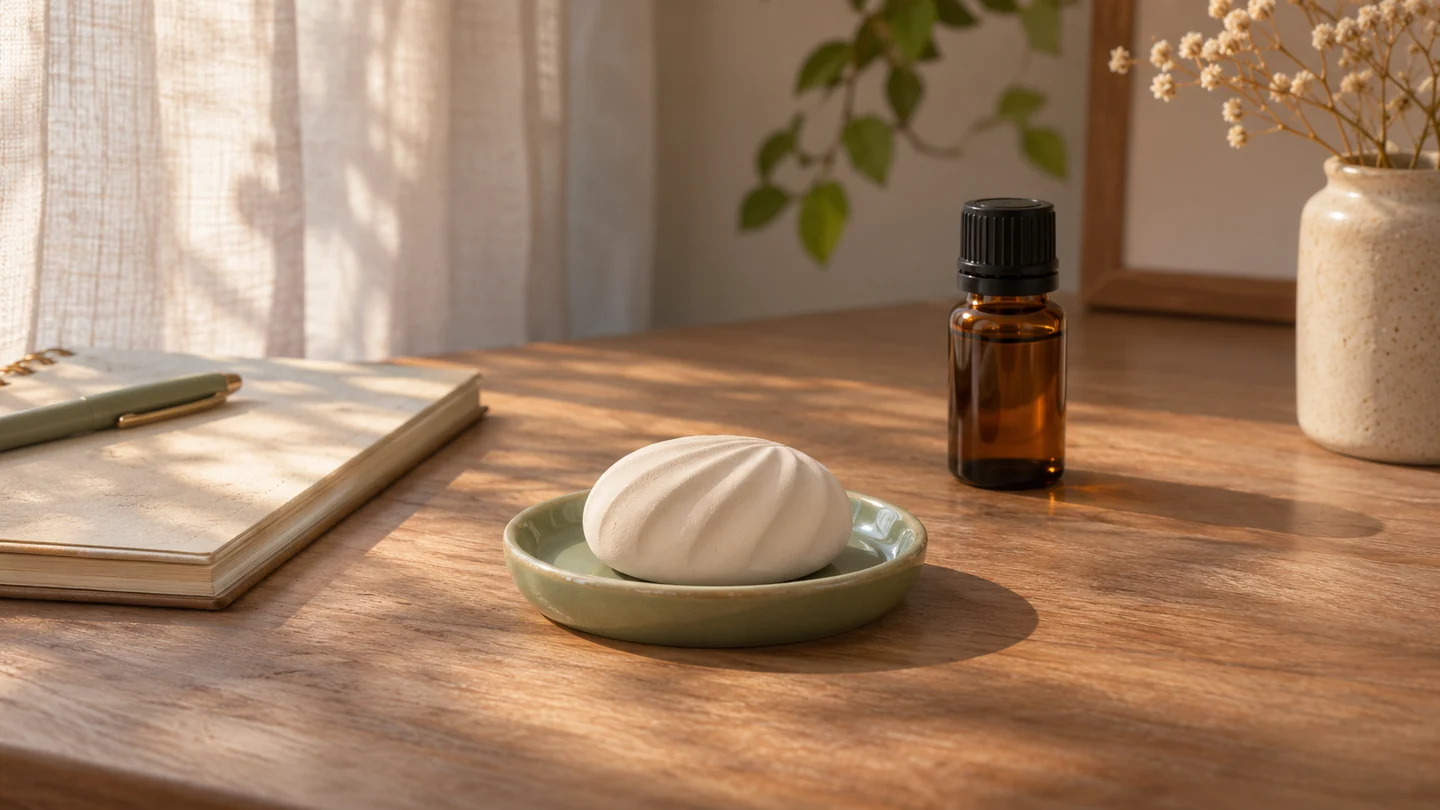
A passive ceramic aroma stone holds oil in its porous surface and lets the fragrance release into the air. There’s no mist setting, power cord or water tank on this type of stone. It’s a format to consider when you want scent near a particular spot, such as your desk, and can give the stone its own dish. MUJI’s unglazed aroma stone description
Check what “ceramic stone diffuser” means on the box
Ceramic can describe the part that absorbs the oil or the outer cover of an electric diffuser. MUJI’s unglazed aroma stone absorbs oil directly. The NOW Solutions Ultrasonic Ceramic Stone Oil Diffuser has a ceramic cover over a powered base and uses water to make mist. If a listing is unclear, look at the parts diagram or use instructions to see where the oil goes and whether the unit needs power. MUJI’s aroma stone · NOW Solutions ultrasonic manual
Think about where you want to notice the scent
A stone has no built-in timer or mist control. That keeps setup simple on a desk without a free socket, but leaves you with fewer controls over when the scent starts or fades. MUJI says scent duration varies with the oil and the surroundings. Use a spot where you can tell whether the scent suits you, and allow for variation if you move the stone or switch oils. If scheduled operation matters, check the controls for the exact powered model you’re considering. MUJI’s aroma stone instructions · Pure Oil Guide’s diffuser timer guide
Plan for the dish and any marks
Check whether the stone comes with a dish. MUJI instructs readers to use the supplied dish because direct contact can mark some surfaces. It also says colour can remain on the stone after repeat use or use with a coloured oil. If you care about how the stone looks on display, check the maker’s care advice before assuming you can wash the marks away. MUJI’s instructions for its unglazed stone describe gentle wiping and caution against strong rubbing. MUJI’s aroma stone care notes
If you like to switch scents frequently, check whether the maker explains how to refresh the stone. The porous surface is where the oil goes, so the process will differ from emptying and wiping a removable reservoir. Our guide to cleaning a diffuser covers what to look for in a powered model’s manual.