Oil storage
Should You Refrigerate Essential Oils?
Compare a cool cupboard and refrigerator storage, read the supplier’s directions, and understand what a cooling study can tell you.
On this page
Check the storage directions on your bottle before moving it to the fridge. If they allow a cool, dark place and you have a cupboard that fits, start there. Refrigeration is an option when your supplier allows it and the places you could use at room temperature regularly get warm.
What two suppliers say about the fridge
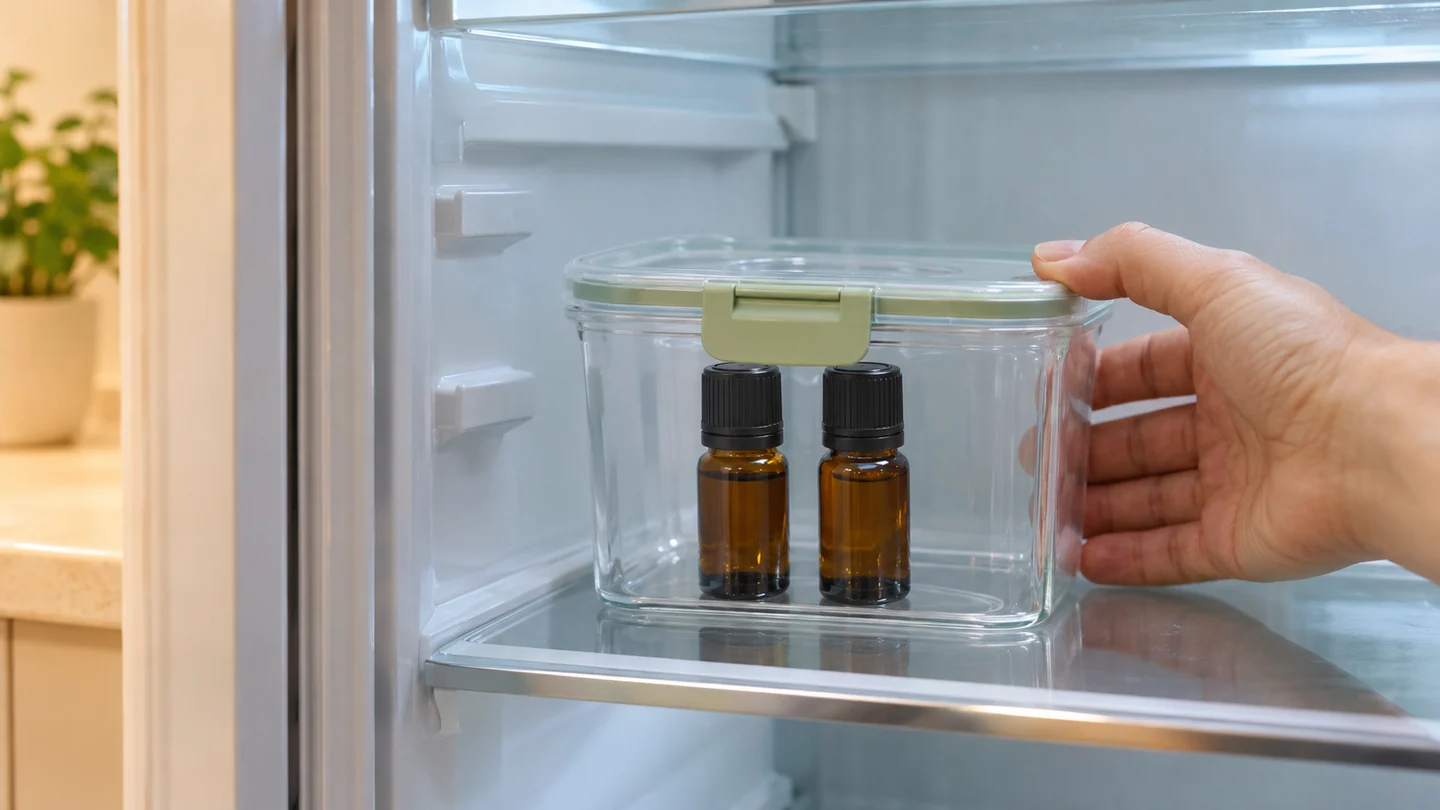
Aromatics International treats refrigeration as optional for its essential oils and recommends a cool, dark location away from direct sunlight. NOW also suggests a cool, dark cupboard or drawer and discusses refrigeration as another option. For a shared fridge, NOW advises keeping the bottles in a separate airtight container because their scent can affect nearby food. Aromatics International storage FAQ and NOW's essential oil storage guidance.
Those recommendations are general. A temperature range or other instruction supplied with your particular oil takes priority. Check the carton or supplier's product documentation if the bottle has little room for directions. Keep the full product name and lot code handy if you need to check which directions apply. How to record batch codes and expiry dates.
What a cooling study can tell you
A 2023 experiment measured changes in peppermint, spearmint, oregano and thyme oils under several laboratory storage conditions, including 4 °C and room temperature. The researchers reported better preservation of chemical composition under cooling in their samples. The study used specific containers and tracked selected oils for up to six months. It gives a reason to consider temperature, but it cannot tell you how much longer a particular opened bottle will last in your kitchen. Ganosi and colleagues, storage stability study.
Choose a place you can use consistently
- Cupboard. Pick a spot away from direct sunlight and appliances that warm the space. Keep bottles in their original containers, with the caps closed and labels readable.
- Fridge. If your product directions allow it, put the capped bottles in a dedicated closed box away from food. Check the temperature of the spot against any range your supplier specifies.
- Mixed collection. Check carrier oils, blends and finished products separately. A storage direction for a straight essential oil may not apply to the bottle beside it. How to distinguish essential oils, carrier oils and fragrance oils.
Moving a bottle does not give you a new expiry date. Keep its existing label and lot information with it, and choose the location that fits the supplier's directions and lets you find the bottle again easily.