Diffuser care
Tap or Distilled Water in a Diffuser? Check the Model First
Compare manufacturer water instructions, check temperature and fill limits, and decide what to ask about local water hardness.
On this page
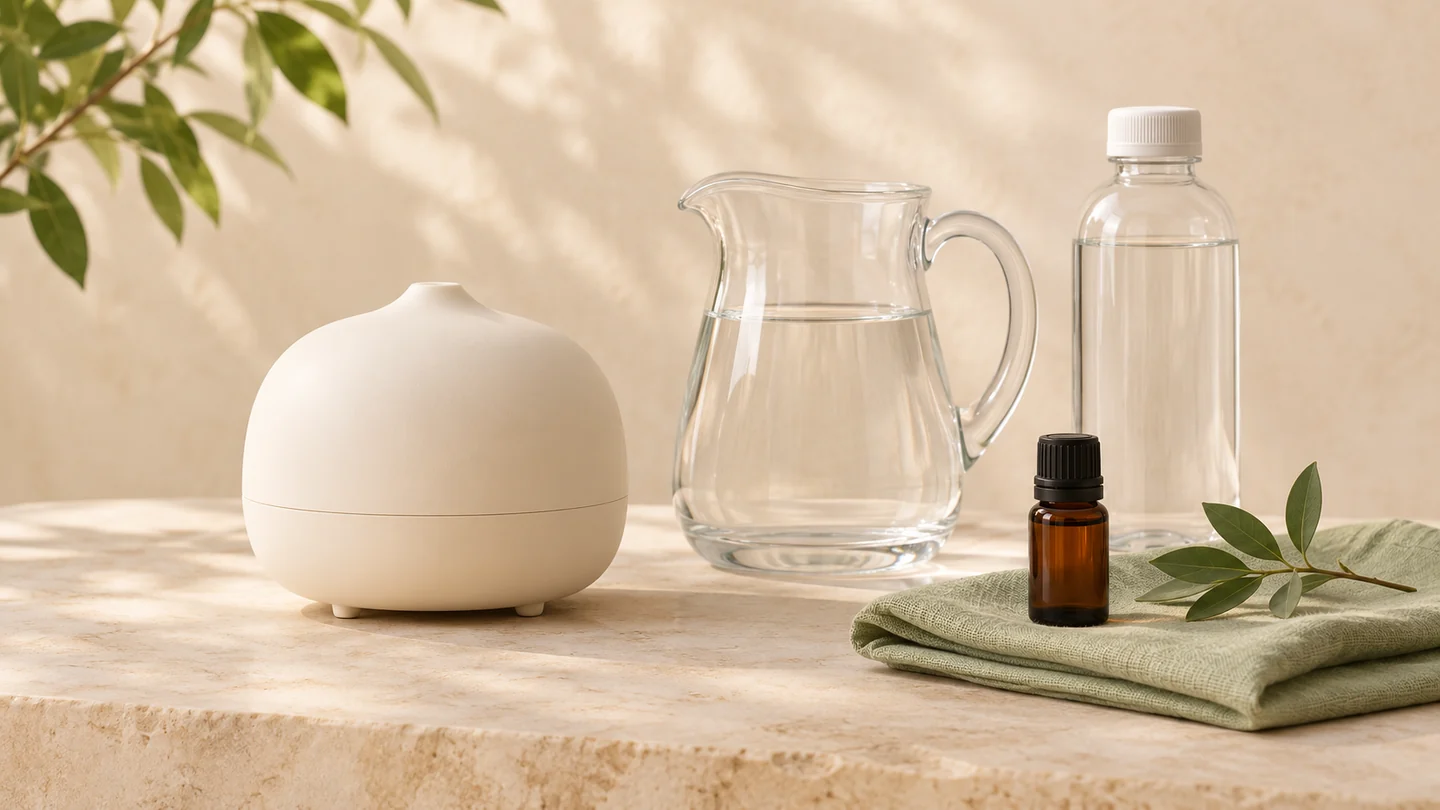
Use the water specified for your exact diffuser. Distilled water is not a universal upgrade: manufacturer instructions differ, even among water-based ultrasonic devices. Before buying a separate water supply, check the model number, manual and troubleshooting page together.
Two sources, different water instructions
NOW Foods’ ultrasonic diffuser FAQ says its units are designed for tap water. It lists distilled or purified water, and water that is too cold, among possible reasons for a lack of mist; its temperature guidance is lukewarm water.
The Young Living Dewdrop v.2 manual, in its English care section, permits tap, spring or distilled water at room temperature. That is a different instruction, not a reason to change a NOW device’s water supply.
These are examples of published instructions, not product recommendations or our own performance tests. Match the manual to the model and revision you own. If a general brand FAQ conflicts with the supplied manual, ask the manufacturer which instruction applies before experimenting.
Make a small refill checklist
Keep these four details with the model number so you do not have to interpret a generic online tip at every refill:
- Permitted water: Record the actual terms used: tap, spring, distilled or another specified type.
- Temperature: Keep the manual’s wording, rather than assuming a hot or cold setting.
- Fill level: Identify the reservoir marker and instructions for that unit.
- Care routine: Note how to empty, clean and dry the reservoir.
For example, the Dewdrop v.2 manual requires unplugging before refilling and filling no higher than its red marker. Its allowance for several water types does not remove those requirements. Our diffuser cleaning guide explains why care instructions also need to match the device.
What if your tap water leaves marks?
The U.S. Geological Survey’s explanation of water hardness identifies dissolved calcium and magnesium as the main contributors. It also cautions that a broad regional hardness map cannot settle conditions at an individual home; a local water utility is a better source for local information.
That background does not establish which water your diffuser accepts, or diagnose a mark in its reservoir. If deposits concern you, ask the maker whether an alternative water type is permitted for your model and how deposits should be removed. A report of local hardness is useful context for that question, not permission to override the manual.
Check before spending more
When a diffuser stops misting, write down the water type, temperature and fill level before contacting support. NOW’s FAQ also lists oil residue on the disc as a possible cause; changing water alone may not address the problem. Use the model’s troubleshooting sequence rather than trying several changes at once.
For a new purchase, water requirements belong alongside cleaning access and controls on your shortlist. The diffuser buying checklist covers those wider tradeoffs. This guide concerns water-based ultrasonic devices; confirm the design first using our ultrasonic versus nebulizing comparison.