Carrier oil labels
Fractionated vs. Virgin Coconut Oil: What the Label Tells You
Compare how fractionated and virgin coconut oils pour, and learn when to check the source of caprylic/capric triglyceride.
On this page
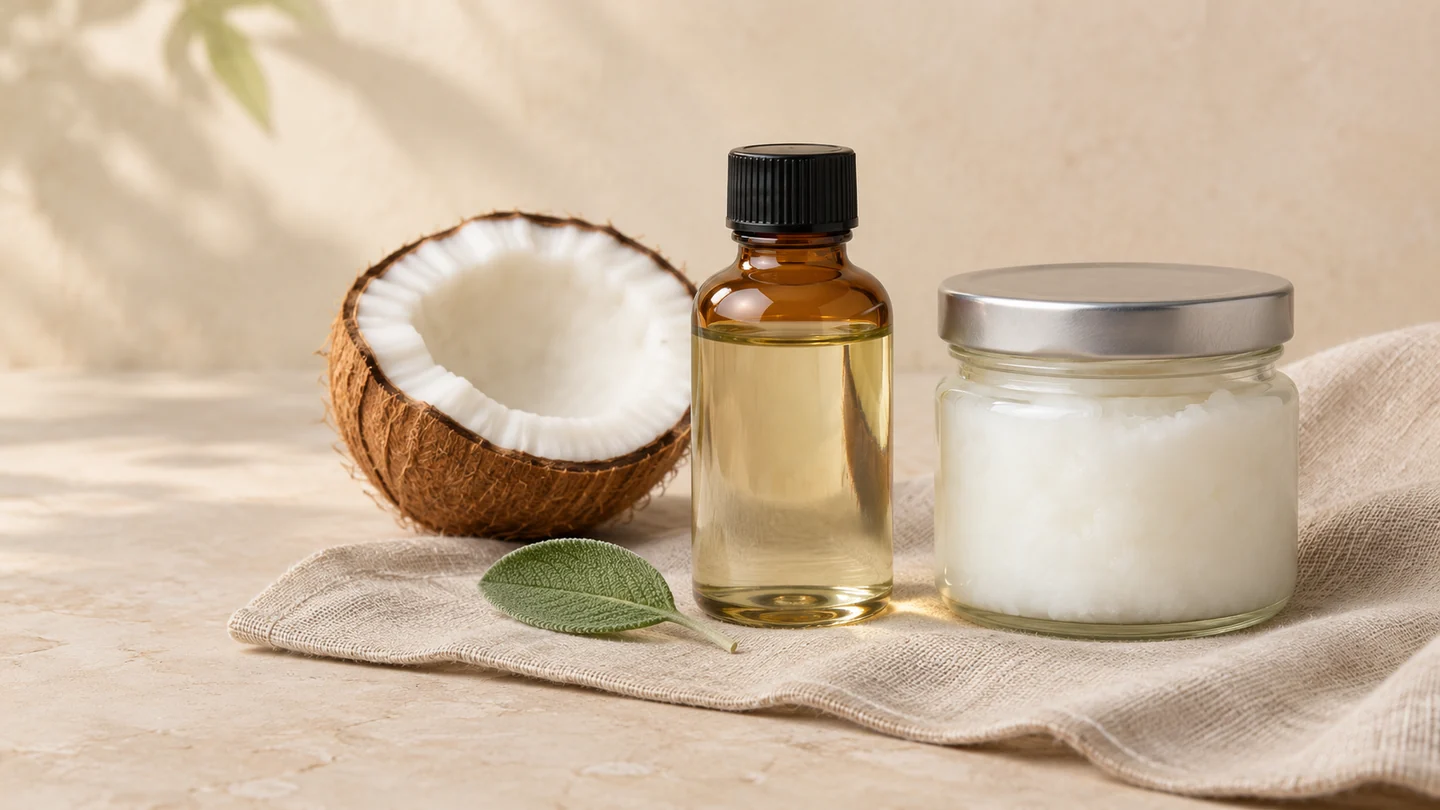
If you need a carrier oil that pours readily on a cool shelf, look for a fractionated coconut oil described as liquid at room temperature. Virgin coconut oil can turn opaque, firm or partly solid as the room cools. The bottle’s ingredient list and the supplier’s source statement can help you distinguish the two.
Why the texture changes
Virgin coconut oil can shift between clear liquid and a white solid as the temperature changes. NOW Foods describes its virgin coconut oil melting at about 78°F (26°C) and explains that partly melted oil can contain white clumps. That number describes its product and is a rough reference, so use the directions on your own container. The appearance alone cannot establish whether an oil is fresh or identify how it was processed. NOW Foods coconut oil FAQ
A fractionated oil has a different balance of triglycerides. For example, Plant Therapy describes its fractionated coconut carrier oil as made by separating medium-chain triglycerides from other components of virgin coconut oil. Shay & Company describes its coconut-derived caprylic/capric triglyceride as a clear liquid with little odour. Those descriptions explain why liquid products can be easier to dispense and why it helps to check the specific supplier’s description if scent matters to you. Plant Therapy’s ingredient and process description, Shay & Company’s ingredient specification
Read the ingredient name and the source separately
You may see caprylic/capric triglyceride on a bottle sold as fractionated coconut oil. The ingredient name describes its composition. If coconut origin matters to you, look for a separate statement that the ingredient is coconut-derived, or ask the supplier to identify the source for that specific product. Caprylic/capric triglyceride can also be made from palm kernel oil. Tom’s of Maine ingredient explanation
Read the whole list if the front says “coconut carrier blend.” The word “coconut” by itself leaves open whether other ingredients are present. See our guide to essential oils and carrier oils if you are comparing bottles with different intended uses.
Match the container to the consistency
A narrow cap or pump is convenient when the oil stays liquid where you keep it. A wide opening is more practical when a product regularly firms up. Use the directions on the container and check that the packaging suits the consistency you expect in your room. Our carrier oil packaging guide explains what to look for in a cap, pump or jar.
When replacing a bottle, save the ingredient list and source statement along with the product name. That gives you something concrete to compare if two labels use similar wording.