Evidence explainer
Essential Oils for Sleep: Relaxation Is Not an Insomnia Treatment
A balanced look at bedtime fragrance, uncertain evidence, diffuser choices, and why DIY bath recipes need care.
On this page
Enjoying a scent as part of a bedtime routine is different from treating insomnia. If you like lavender, the practical question is whether fragrance fits your household and preferences—not whether a retail bottle can guarantee better sleep.
The earlier article used cure language and an unsupported claim of a 60% improvement in sleep quality. Those claims and the bath recipe have been removed.
What does the evidence support?
NCCIH says it remains unclear whether lavender aromatherapy benefits sleep quality or insomnia. Research involving an oral preparation, a supervised intervention, or a particular group of participants cannot simply be applied to any lavender bottle or diffuser. Read NCCIH's lavender overview.
That uncertainty should be visible when a product is promoted for bedtime use. “Lavender scented” describes a characteristic; “treats insomnia” is a different and much stronger claim.
If fragrance is part of your routine
Choose a product for its intended use and follow its directions. You do not need a complex blend or a large collection of oils to decide whether you like a scent. Keep the preferences and sensitivities of anyone sharing the room in mind.
A timer is a convenience feature, not evidence of a safe exposure duration for every person. There is no need to run a diffuser all night to get value from owning it. If fragrance triggers discomfort, switching it off is more sensible than adding more oil or searching for a stronger unit.
Do not improvise a bath formula
Essential oils do not disperse evenly in bath water on their own, and adding a carrier oil is not the same as making a properly dispersed bath product. Use a finished product intended for the bath and follow its directions rather than adding drops of concentrate to the water. Tisserand Institute's bath-safety resources explain this distinction.
Buying a diffuser for a bedroom
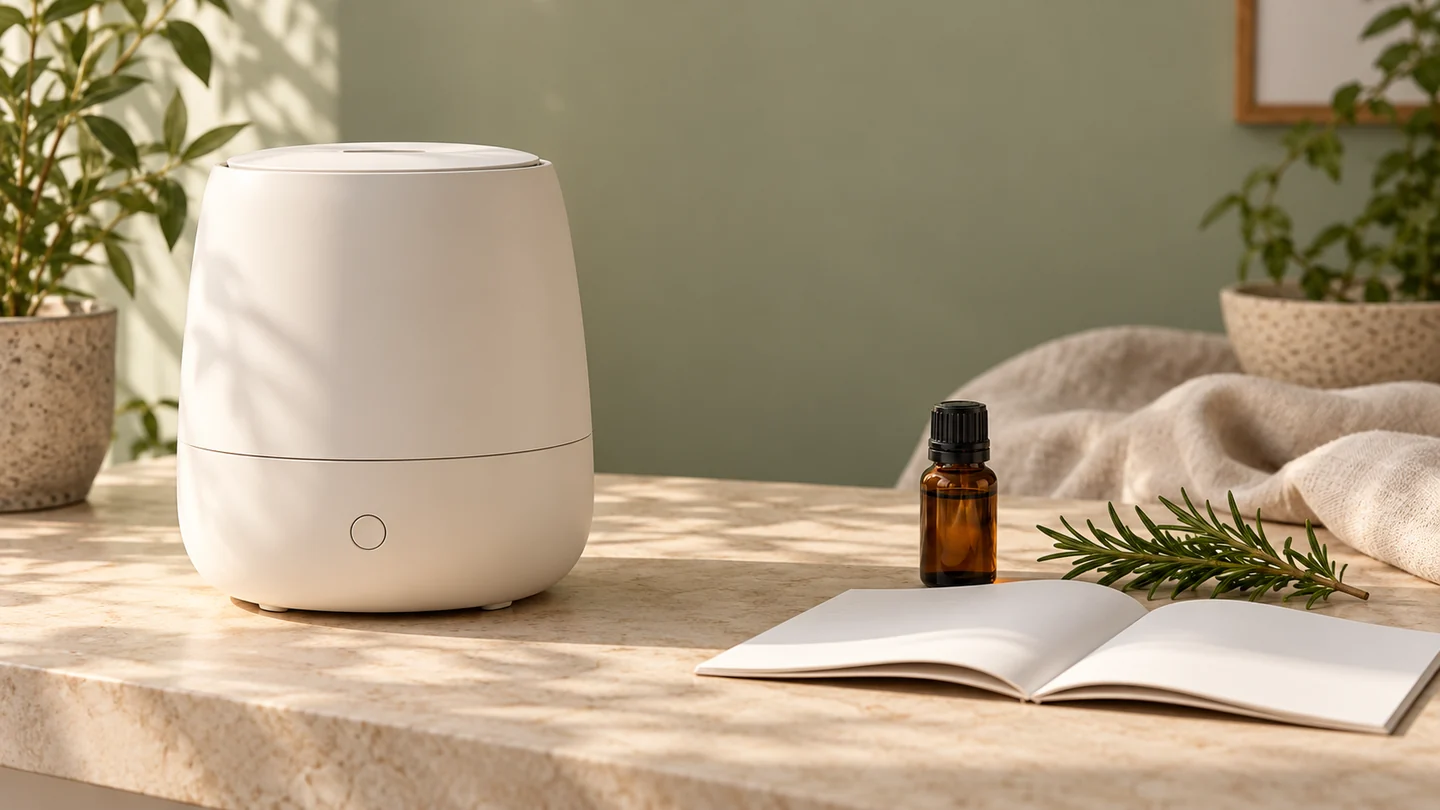
Look for independent light control, straightforward settings, stable placement, and a cleaning routine you can maintain. Manufacturer noise claims are not a substitute for measured testing, so check return terms if you are particularly sensitive to sound.
Our diffuser buying guide explains the design tradeoffs without claiming a device treats a sleep condition.
When sleep itself needs attention
If sleep problems persist or affect your daytime functioning, talk with a qualified healthcare professional. Bringing a list of medicines, supplements, and products you use can make the discussion more useful. A fragrance purchase should not delay assessment of an ongoing problem.
Sources and approach
This is a guide to evaluating bedtime aromatherapy claims, not a treatment recommendation. Sources are linked above. We have not conducted a sleep trial or tested a sleep-improvement product.