Product guide
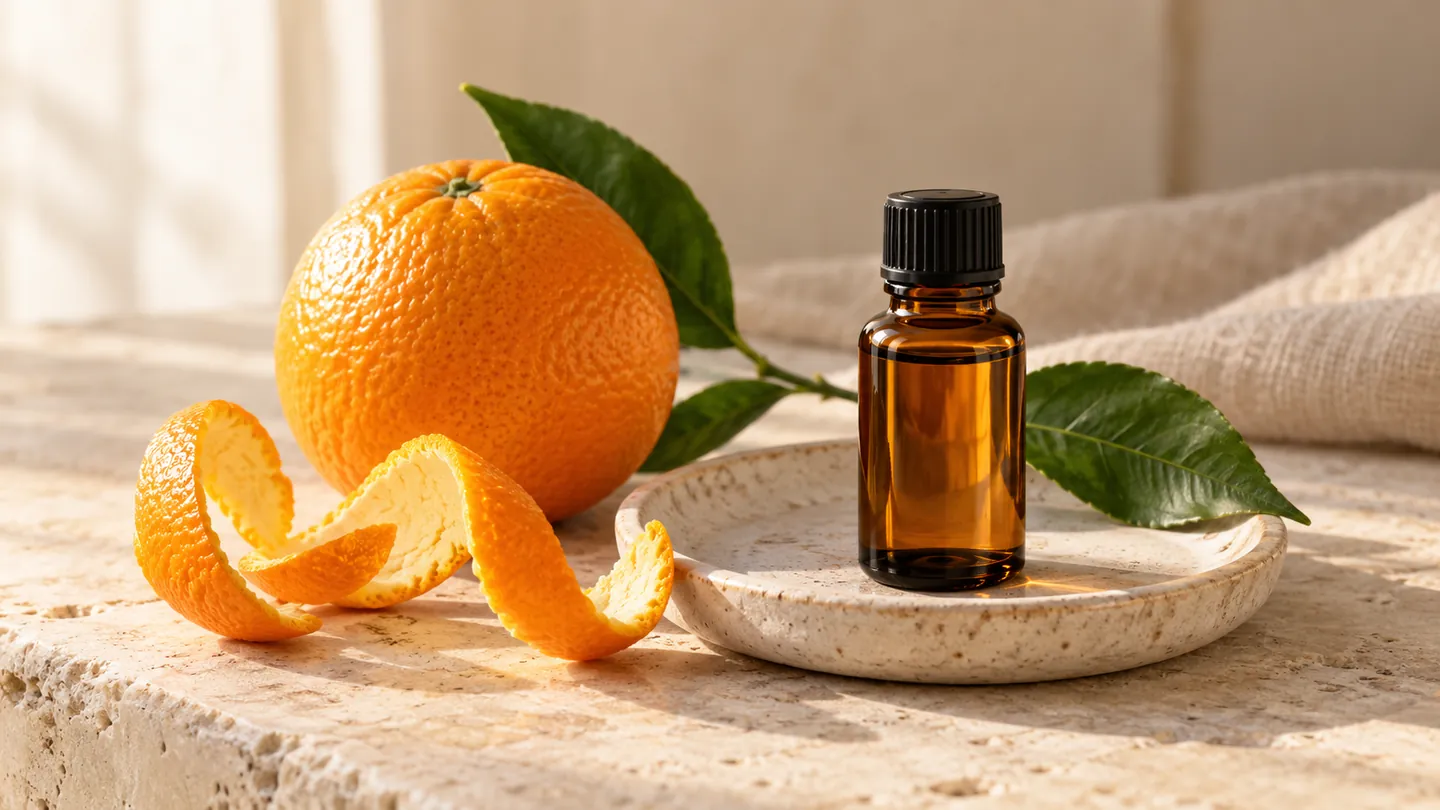
Orange Essential Oil: Identity, Uses, and Buying Checklist
Check the botanical identity, extraction, intended use, and specific precautions behind an orange oil label.
As an Amazon Associate I earn from qualifying purchases. Shopping links may earn us a commission at no extra cost to you. How affiliate links work.
On this page
“Orange oil” is not a complete product description. The botanical species, plant part, extraction method, ingredients, and intended use help distinguish one aromatic product from another.
If your goal is a citrus scent, those details are more useful than a broad promise that an oil improves health or emotions.
Read beyond the common name
Check the botanical name and whether the product identifies a peel oil, a blend, or a fragrance product. Do not assume that sweet orange, bitter orange, and every other citrus oil share the same characteristics or precautions.
Also check whether the bottle is a concentrate or a dilution. A clearly disclosed dilution can be appropriate for an intended use; it should not be confused with a different product simply because both labels say orange.
Extraction and use matter
Citrus oil precautions can depend on the oil and how it was produced. Avoid both blanket claims that every citrus oil causes a sun reaction and blanket claims that every orange product is exempt. Consult product-specific directions and reliable oil-specific safety information. Tisserand Institute compares citrus oils.
If you want a body product, choose one intended for that use and read its directions. An oil being suitable for a compatible diffuser does not establish that it is suitable for direct skin application.
For home fragrance
Check your device's instructions before using an oil. Carrier oils and some fragrance formulations may be unsuitable for a given mechanism. Use the labelled product as directed rather than adding more because the scent seems faint.
Keep fragrance preferences in mind in a shared room. The fact that a scent comes from a plant does not mean everyone will find it comfortable.
For household cleaning
An orange scent does not demonstrate that a product disinfects. If you need a surface cleaner, use a product intended for the job and follow its label. Do not add essential oil to an existing cleaning chemical or improvise a disinfectant recipe.
How to compare listings
- Match the common name with the botanical identity.
- Check ingredients, extraction information, and intended use.
- Compare quantity and concentration together.
- Read cautions and storage directions.
- Ask the supplier about unclear or conflicting information.
Search Amazon for sweet orange essential oil. The search is a browsing aid, not a claim that every result has been checked or is interchangeable.
Sources and approach
This guide focuses on identifying and choosing a product, not treating a condition. Sources: the Tisserand Institute citrus guide above and FDA aromatherapy guidance. We have not analysed retail oil samples.